Your cycle, simply
Your cycle has four phases. Hormones rise and fall across them, and many women notice changes in energy, hunger, sleep or mood. Many notice very little. Both are normal.
Period
The lining of the womb sheds. Oestrogen and progesterone are both low.
Some notice: lower energy, cramps, tiredness.
Follicular
FSH (follicle-stimulating hormone) helps follicles in the ovaries develop, and oestrogen rises.
Some notice: energy and mood lifting.
Ovulation
A surge of LH (luteinising hormone) triggers the release of an egg.
Some notice: a change in mood or libido. Many notice nothing.
Luteal
Progesterone rises. If there's no pregnancy, both hormones fall before your next period.
Some notice: more hunger, cravings, bloating, or changes in sleep and mood.
*Cycles of about 21 to 35 days are common, and ovulation doesn't always happen on day 14. If you use hormonal contraception or are in perimenopause, your pattern will look different. The habits below still apply to you.
5 habits for steady energy
You don't need a different diet for each phase. These work all month, and help most when your appetite rises before your period.
Eat enough
Enough total food is the foundation for energy, regular periods and strong bones. Under-eating, especially when you're active, can turn down the hormone signals that run your cycle.
Low energy availability occurs when your dietary energy intake is insufficient to support both exercise demands and the body's normal physiological functions. Consistently under-fuelling can affect menstrual function, bone health, immunity, recovery and performance. This can happen at any body size.
Pay attention to your energy, recovery, menstrual health and relationship with food, and seek professional support if you're concerned.
Try: don't skip meals, and have a carbohydrate snack before workoutsSlower-release carbs at meals
Oats, rice, sweet potato, beans, lentils and wholegrain bread give steady energy and keep you fuller. Cutting carbs isn't good for most active women's hormones.
Try: add some whole grains to your meals, like brown rice or wholegrain noodlesProtein at every meal
Spread protein across the day, not just at dinner. A palm-sized portion per meal is a simple guide. It supports muscle, recovery and fullness.
Try: eggs, yoghurt or tempeh at breakfast; meat, fish, tofu, tempeh or beans at lunch and dinnerIron, with vitamin C
Periods increase the iron you lose. Include red meat, beans, lentils, tofu or leafy greens, and pair plant sources with vitamin C from fruit, peppers or fresh herbs. If a meal is your iron focus, have calcium-rich foods like dairy at a different meal, and keep tea and coffee an hour away from it, as both can reduce how much iron you absorb.
Try: tea and coffee an hour away from your iron-rich mealsPlant variety
Different colours, grains, beans, nuts, seeds, herbs, spices, tea, coffee and even dark chocolate (75% or more) all count towards your 30 plants a week.
Try: choose a new vegetable to try each weekBefore your period
If you're hungrier in the week before your period, listen to it and feed it well. Slower-release carbs with protein make cravings easier to manage.
Craving chocolate? Honour it. Cocoa contains magnesium, a mineral involved in muscle and nerve function. Magnesium has been investigated for its potential role in PMS symptoms, including bloating and water retention, although the evidence is mixed.
Other magnesium-rich foods include leafy greens, pumpkin seeds, almonds, cashews, beans, lentils and whole grains. An Epsom salt bath can be a relaxing way to unwind, though there's little evidence that much magnesium is absorbed through the skin.
Try our sweet potato brownies: chocolate, plus fibre and healthy fats to keep your energy steady.
Bones & muscle for later life
Oestrogen helps protect your bones, and bone loss speeds up in perimenopause. Muscle mass and strength can gradually decline with age, although the rate varies between individuals. Regular resistance training, adequate protein and sufficient energy intake help maintain muscle mass, strength and function throughout adulthood.
For your bones
- Eat enough, so your cycle and oestrogen stay healthy
- Calcium: dairy, calcium-set tofu, small fish eaten with bones, leafy greens
- Vitamin D, from safe sun exposure, oily fish and eggs
- Some impact (running, skipping, jumping) or heavier strength work alongside yoga
For your muscles
- Protein at every meal
- Strength training around twice a week
SoulFuel snack recipes
Two bakes from the workshop. Both are great with a spoon of Greek or soy yoghurt on the side: that adds protein and clothes the carbs, so the energy lasts longer.
Sweet potato brownies
Fudgy and rich, with sweet potato for fibre, nut butter for healthy fats, and cocoa for magnesium.
Ingredients
- 1 cup (250g) sweet potato purée, from about 350g raw sweet potato
- ⅔ cup (160ml) maple syrup or honey
- ½ cup (125g) almond or peanut butter
- 1 tsp vanilla extract
- 1½ tbsp (20g) coconut or avocado oil
- ½ cup (45g) cocoa or cacao powder
- ¼ tsp sea salt
- 1 tsp baking powder
- ⅔ cup flour: 65g oat flour, or 85g plain, chickpea or almond flour
- ½ cup (60g) chopped nuts, such as walnuts, almonds or pecans
- ¼ cup (45g) dark chocolate chips (optional)
Method
- Make the purée: peel and chop the sweet potato, boil for about 20 minutes until soft, then drain and mash until smooth.
- Heat the oven to 180°C and line a 20cm square tin with baking paper.
- In a large bowl, stir together the sweet potato, maple syrup, nut butter, vanilla and oil.
- Stir in the cocoa, salt and baking powder, then the flour, until you have a thick batter.
- Spread evenly in the tin and scatter the nuts and chocolate chips over the top.
- Bake on the middle shelf for 30–40 minutes, until the edges look dry and a skewer in the centre comes out with just a few crumbs.
- Leave to cool in the tin for 30–60 minutes before lifting out and slicing.
Storage. Covered at room temperature for up to 3 days, in the fridge for 5–7 days, or frozen for up to a month. Contains tree nuts or peanuts.
Silken tofu banana bread
Silken tofu replaces the eggs and adds protein, and ripe bananas do most of the sweetening. Walnuts provide plant-based omega-3 fatty acids, primarily alpha-linolenic acid (ALA). ALA is an essential fatty acid, although its conversion into the longer-chain omega-3 fats EPA and DHA is limited.
Ingredients
- 1 pack (340g, about 1½ cups) soft silken tofu, drained
- 3 large ripe bananas (about 1¼ cups mashed)
- ⅓ cup (80ml) maple syrup or honey, or up to ½ cup (120ml) if you like it sweeter
- ½ cup (120ml) vegetable oil
- 1 tsp vanilla extract
- 2 cups (300g) plain flour. Or use wholemeal, spelt or a gluten-free flour blend, or swap half for oat flour or blended oats (about 1 cup / 90g)
- ½ tsp salt
- 1 tsp bicarbonate of soda
- 1 tsp baking powder
- 1 cup (100g) chopped walnuts, or any mix of nuts and seeds
Method
- Heat the oven to 175°C and grease a 23×13cm loaf tin well.
- Put the drained tofu in a large bowl and mash in the bananas.
- Add the maple syrup or honey, oil and vanilla, and beat until smooth and creamy.
- Add the flour, salt, bicarbonate of soda and baking powder, and mix until just combined.
- Fold in the walnuts and pour into the tin.
- Bake for about 55 minutes, until a skewer in the centre comes out clean. Syrup browns faster than sugar, so if the top darkens early, cover it loosely with foil for the last 15 minutes.
- Cool in the tin, then turn out and slice.
Contains soy (tofu), gluten (flour, unless you use a gluten-free blend and certified gluten-free oats) and tree nuts. For a nut-free version, use pumpkin and sunflower seeds instead of walnuts.
What we learned today
A quick reminder of the workshop, so you can choose the habit that fits you best.
1. Blood sugar and hormones
Meals that combine carbohydrates with protein, fibre and healthy fats can help moderate post-meal blood glucose responses and keep you feeling satisfied for longer.
Eating regularly and consuming enough energy also supports overall metabolic and reproductive health.
2. The four tools
- Don't skip breakfast. Coffee is fine, just have it with food, not instead of it.
- Clothe your carbs. Pair them with protein, fat or fibre so the energy lasts.
- Fibre and colour. Aim for 30 different plants a week. Seeds, herbs and spices count.
- Eat regularly. Every 3–5 hours, with water in between.
3. The balanced plate
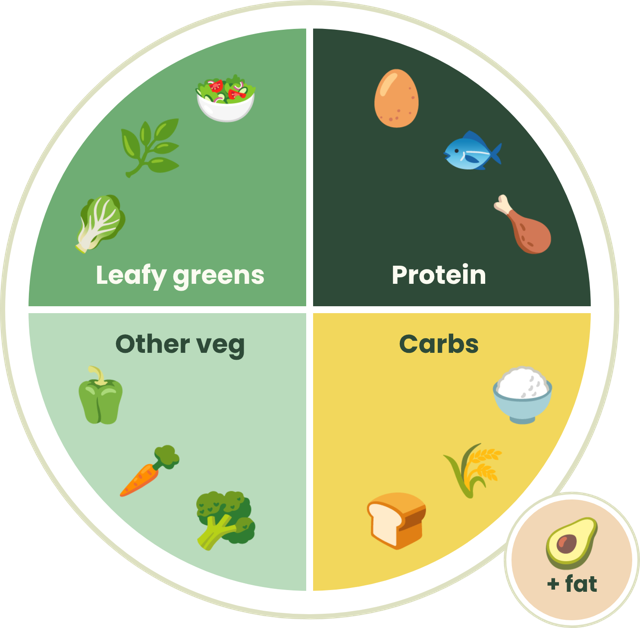
- Half veg: some leafy greens and some colourful veg.
- A quarter protein: a palm-sized portion.
- A quarter carbs: mostly whole grains. Quicker carbs like white rice are fine before training.
- Plus a little healthy fat: avocado, olive oil, nuts or seeds.
The balanced plate is a flexible guide rather than a strict formula. Your individual needs will vary depending on your activity levels, appetite, health and goals.
If you're regularly running or exercising, you may need larger portions of carbohydrates to support training, replenish glycogen and aid recovery.
4. The balanced snack
A carb + protein or healthy fat, with fibre and colour as a bonus.
Apple and peanut butter · yoghurt, berries and seeds · banana and nuts · edamame and an orange · a brownie with yoghurt.
5. Myths we busted
- Fasting is great for women's hormones: it depends. Many active women feel better with breakfast.
- Bloating before your period is just life: mostly myth. Increase fibre slowly, with plenty of water. See your doctor if bloating is constant, is there even first thing in the morning, or comes with pain or changes in your bowel habits.
- Seed cycling balances hormones: not proven. Seeds are brilliant, every day.
- Cutting carbs steadies your energy: myth for most active women. Clothe them instead.
Choose your habits
Tap up to three to add them to your 30-day check-in, or write your own in the tracker. Starting with one is great; three is plenty.
Your 30-day energy check-in
SoulFuel 30-day energy check-in. Shade each day: L = low, O = OK, G = good energy. Write 1, 2 or 3 for the habits you did, and circle your period days.
My habits: 1. ____________ 2. ____________ 3. ____________
Take ten seconds a day to note your energy, tick off your habits, and mark your period days. After a month, look for patterns. It's about noticing, not being perfect.
Tap a day to cycle through low, OK and good energy.
Your check-ins are private and saved only on this phone, in this browser. Nothing is sent to anyone. Tip: open this page in Safari or Chrome (not inside Instagram) and add it to your home screen, so your check-ins are always there.
After 30 days, ask yourself
- Do my low-energy days cluster at a certain time of the month?
- Do they follow busy days, poor sleep or skipped meals?
- On days I did my habits, was my energy any different?
When to see a doctor
Mild discomfort is common, but seek medical advice if you experience:
- Very heavy menstrual bleeding, such as regularly soaking through a pad or tampon every hour
- Persistent or severe period pain
- Bleeding between periods or after sex
- Periods that stop for three months or more (when you're not pregnant), or cycles that are very irregular, shorter than 21 or longer than 35 days
- Persistent fatigue, dizziness or unexplained changes in your menstrual cycle
- Symptoms that significantly affect your daily life
Heavy bleeding accompanied by faintness, severe dizziness or other concerning symptoms warrants prompt medical assessment.
Stay in touch
I'm Christine, the founder of SoulFuel.Run in Hanoi. I hold a Nutrition Diploma (Dip ION), I'm now studying for a degree in Nutritional Therapy, and I'm a UESCA-certified run coach. I help active women fuel well for energy, training and long-term health.